The part that got cheap
For most of the last two decades, an agency invoice was mostly labor. Hours of design, hours of development, hours of copy. That labor is what made agency work expensive, and it is the part AI just collapsed.
Anyone can generate a working website in an afternoon now. The tools are genuinely good, and we would know, because we use them all day. Production is no longer scarce, so production is no longer the thing you are paying for.
That should change how you shop for this work. If a proposal is still priced like execution is the hard part, you are paying for hours a machine now works. The right question to ask any studio is blunt: if the making got cheap, what exactly am I buying?
What you're paying for now
Three things survived the collapse: judgment, taste, and context. Judgment is knowing which problems matter, which corners are safe to cut, and when to stop. Taste is the few hundred small calls that separate work built for your business from work built for a template.
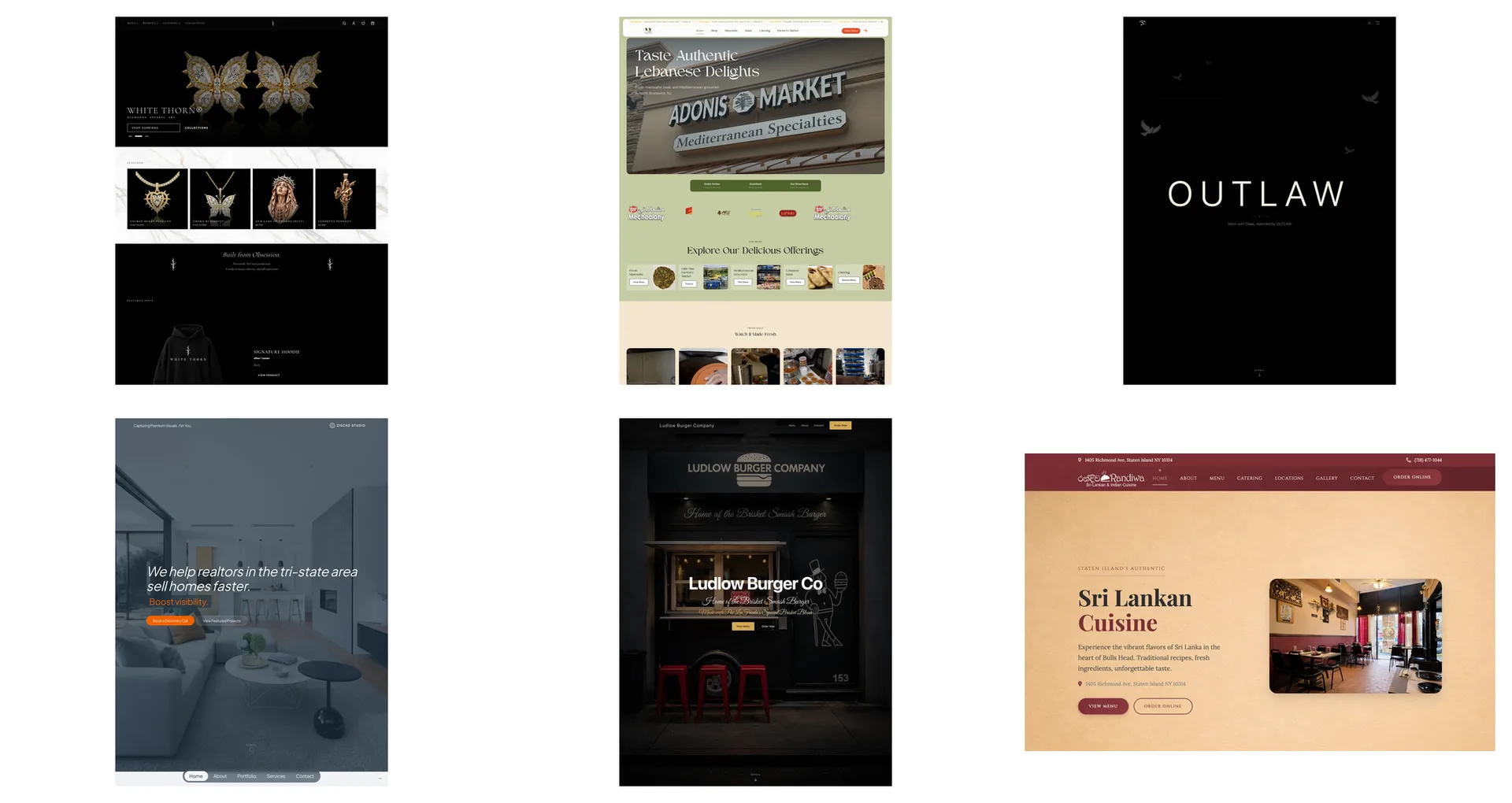
Taste in practice looks small. When we built White Thorn Gallery's jewelry storefront, the expected palette was gold; we shifted it to a custom lavender so the brand would read high-end instead of templated. Any tool will generate the obvious version for free. Knowing the obvious version is wrong is the job.
Context is the part that compounds. Adonis Market's Google Business Profile is still its strongest organic channel, which is exactly the kind of fact a generator does not know and a plan has to be built around. You are not paying for hands anymore. You are paying for someone who knows your business making the calls.
Principal-led, AI-directed, in plain terms
BEIRUX is one studio: principal-led, AI-directed. A principal makes every call that touches your business, and an AI system does the labor those calls create: the code, the drafts, the variations, the busywork. The work ships fast because AI handles the labor. It ships well because taste, strategy, and craft are not delegable.
Here is the honest limit of the technology: AI multiplies hands, and it has never multiplied taste. Hand a weak director better tools and you get weak work, faster. The machine raises the floor of what one studio can produce. It does not raise the ceiling of what anyone can judge.
So we will not invent a team page to look bigger, and we will not lean on a struggle story to look scrappier. What you get is direction: work that is directed, not generated, by someone accountable for the outcome. The proof is public, and you should judge it the way a customer would.
The generated look
When everyone uses the same generators with the same defaults, the output converges. Same layouts, same copy rhythm, same slightly-off details nobody caught because nobody was directing. Customers may not name the problem, but they register it: this business bought the same website as everyone else.
The fix is not avoiding the tools. The fix is rejection: someone turning down the first draft, and the fifth, because they know what your business should look like. For Adonis Market that meant a real brand system (palette, type, content templates) and menus turned into a single structured source of truth, so four channels post on a schedule and none of it looks templated.
The other tell of generated work is what it skips: the parts nobody sees. When we built Cartley, a sales-intelligence agent platform we took through a live pilot, the hard problems were invisible ones, like keeping agent runs idempotent so a retry does not double the work. Generators handle the visible half of a build. Judgment covers the half that decides whether the thing actually runs.
Ownership matters more, not less
Here is the part of the AI story most vendors skip: when rebuilding is cheap, lock-in is the only hold a bad vendor has left. The old excuse for staying with an agency you had outgrown was that leaving cost too much. AI killed that excuse, unless you do not own your own site.
So everything we build ships to your accounts: your site, your code, your domain, your data. We stay on to run it, but you can walk away clean, with no lock-in, no rented platform, no proprietary CMS. If we stop being useful, you fire us and nothing breaks.
That arrangement keeps everyone honest, including us. In a market where execution is a commodity, the only durable reason to keep a studio is that it keeps earning the spot. Ownership is what makes that pressure real.
If you're hiring this year
If all you need is a page that exists, use a generator and keep your money. That is a fine outcome for some businesses, and any studio that tells you otherwise is selling hours it no longer works.
If the calls matter, hire for the calls. Ask who actually makes the decisions on your account, and how they will learn your business. Ask what you own on the day you leave: the domain, the code, the data, all of it. Then look at live work and judge whether it reads like a template or like the business it was built for.
Our projects are public, so run that test on us first. If you want a studio that leads with judgment and ships fast because the labor is automated, that is what BEIRUX is built to be. Get in touch and let's talk about your business.
Working on something like this? Tell us what you need or see the related service.