The walk-away test
Here's a test worth running before you sign with anyone, including us. If you fired your agency tomorrow, what would you still have? Not what you paid for over the years, but what you would actually hold: the domain, the code, the hosting, the data.
For a lot of small businesses the honest answer is: not much. The site lives inside a platform or on the agency's accounts, the domain is registered under someone else's name, and the customer list sits in a system that won't export cleanly. The relationship ends, and the asset you thought you bought ends with it.
Owning your website means four specific things. The code sits in a repository you control. The domain and hosting are registered to accounts you hold. Your data (orders, customers, content) can leave with you in a format another developer can use.
What renting looks like
Renting comes in two forms. The obvious one is the site builder or proprietary CMS: you pay monthly and the site exists only inside that platform. Stop paying and it goes away; try to leave and the best you can usually export is your text and images, not the working site.
The quieter form is the agency that builds you a custom site but registers the domain under its own account, hosts it on its own plan, and keeps the code private. Everything works fine until the relationship changes. Then you find out you were renting all along, just with extra steps.
The domain deserves special attention, because everything hangs off it. Early in our engagement with Adonis Market, a family-run grocery in North Brunswick, a domain suspension knocked the site and business email entirely offline. One failure at that layer takes down the whole business online, which is exactly why the domain belongs in an account you hold, not your vendor's.
What owning looks like
Our default is the opposite: everything ships to your accounts, your repos, your domain. Your site, your code, your domain, your data. We stay on to run it if you want us to, but you can walk away clean. No lock-in, no rented platform, no proprietary CMS.
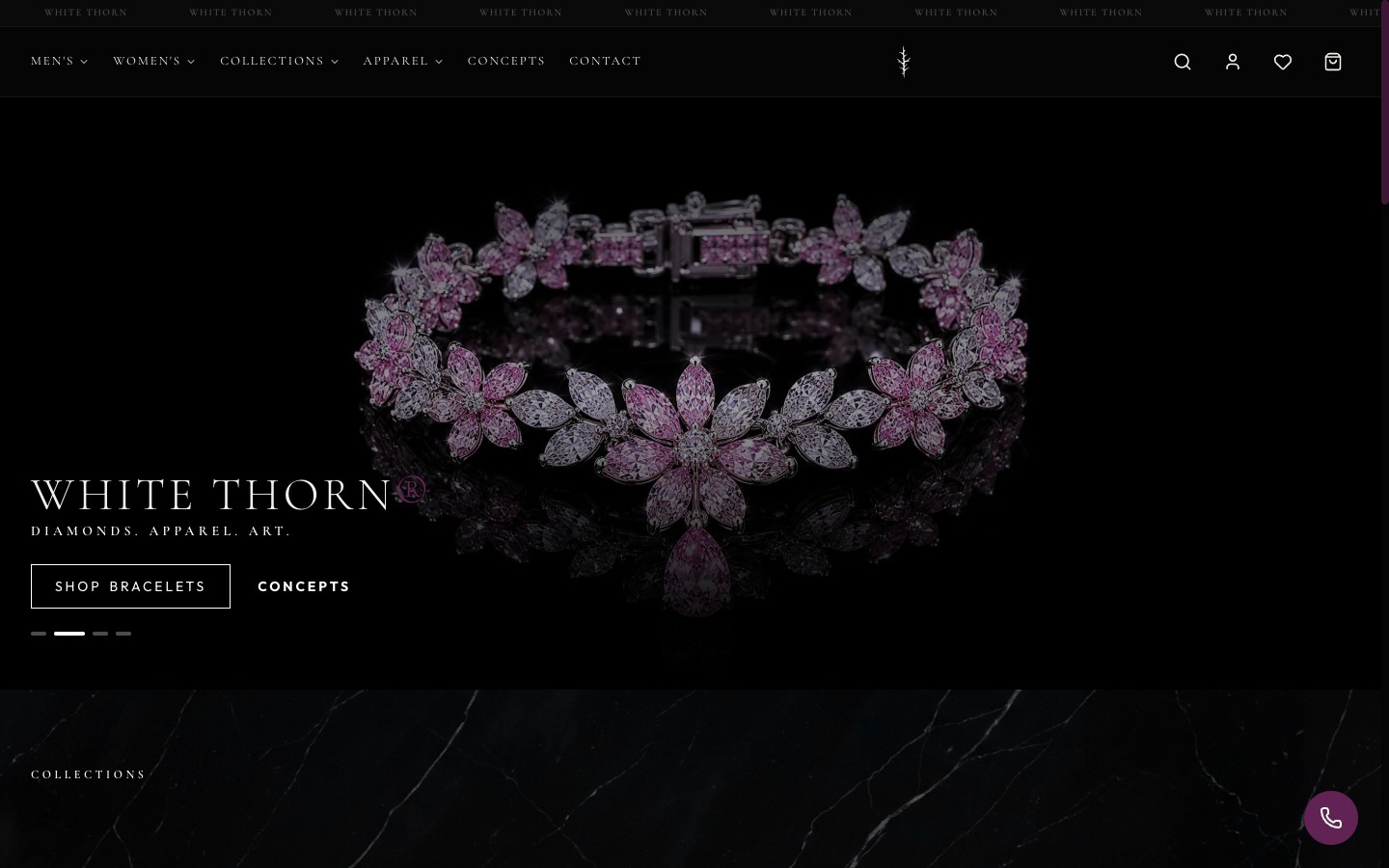
White Thorn Gallery shows what that looks like in practice. Steven Paul came to us with a jewelry and fine-art business and no online store, so we built one from zero: a Next.js storefront with Stripe checkout wired end to end, including webhooks so orders settle cleanly. The launch plumbing was part of the build too: the domain, going live, and submission to Google Search Console and Bing Webmaster. We shipped the store with Stripe checkout running end to end.
None of this requires you to become technical. Ownership is about where things live, not who operates them. You don't service your own car, but the title is in your name.
Own it without running it
The usual objection: I don't want to manage a website. You don't have to. Ownership and operation are separate decisions, and renting is what happens when a platform welds them into one bill.
Our retainer clients work exactly this way. Adonis Market runs as an ongoing retainer: hosting and maintenance plus monthly social media management. Mia Makes Meals ran on a small monthly retainer that kept the landing page hosted and current for as long as she needed it.
The difference is what the monthly fee buys. They pay us to run the thing, not for permission to keep existing. If either walked tomorrow, they would leave with a working site, the domain, and the code. We stay on because the work earns it, not because leaving is expensive.
What to ask before you sign
Five questions, all fair to ask before any money moves. Whose account is the domain registered in? Where does the code live, and do I get access to the repository? Whose name is on the hosting account?
Then the two that reveal the most. If we part ways in a year, what exactly do I keep and what breaks? And can I export my data (customers, orders, content) in a format another developer could pick up?
Good answers are specific and a little boring: account names, transfer steps, file formats. Vague answers, the 'don't worry, we handle all that' kind, are the tell. Anyone whose business model depends on you not asking will not enjoy this conversation, which is exactly why you should have it.
We built our own studio to pass this test, so run it on us. Bring the five questions to a call and we'll answer them before you sign anything. If the answers hold, build with us. Your code, your domain, your data, no lock-in. That's the deal.
Working on something like this? Tell us what you need or see the related service.